
A recent Sky News investigation into some of the UK’s largest illegal waste sites makes for uncomfortable reading — particularly when we think about the enormous amount of clothing and textiles we throw away every year.
Sky News spent six months working with scientists to test the air, water and soil at three huge illegal waste sites in Gloucester, Wigan and Ranskill near Doncaster.What they found was alarming.
Scientists detected a toxic cocktail of hundreds of different chemicals. At the Gloucester site alone, around 100,000 tonnes of waste has sat for more than seven years, and tests of the fumes identified almost four times as many chemicals as those typically found in emissions from an average car exhaust.
So what does this have to do with fashion? Quite a lot.
We’ve become incredibly good at buying clothes, but we’re far less successful at taking responsibility for them once we’ve finished wearing them. Every year, we discard millions of tonnes of textiles, sending far too many to landfill, incinerators or overseas instead of giving them a second life. Throwing clothing away doesn’t end its environmental impact. It simply moves the problem somewhere else.
Does The Fashion Industry Have A Problem?
Duh Yeah!
The modern fashion industry produces enormous quantities of clothing, and much of it contains synthetic fibres such as polyester, nylon and acrylic. Here’s the important point: polyester is plastic. That cheap polyester top doesn’t become harmless simply because we call it clothing instead of plastic.
When we throw synthetic clothing away, we’re throwing away a plastic product that may take an extremely long time to break down.
The Sky News investigation did not identify textiles as the source of the contamination, and we shouldn’t claim that it did. What it does show, however, is the damage that can occur when we allow enormous quantities of waste to build up without managing them properly.
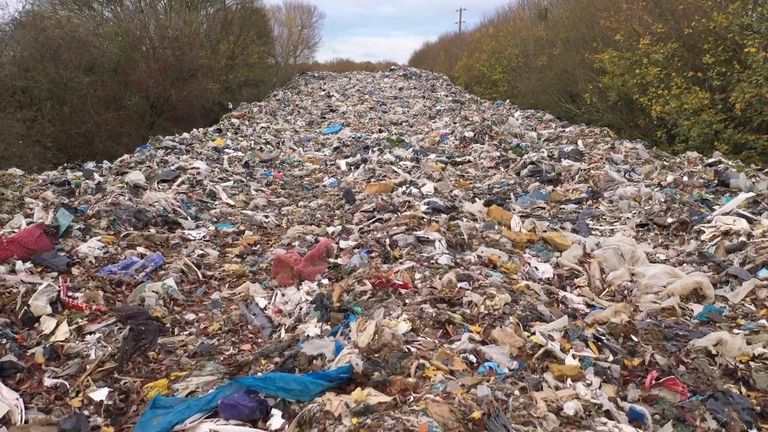
At the Gloucester site, scientists uncovered chemicals associated with plastics, fuels, oils, tyres, resins, paints, solvents and chlorinated materials. The pollution wasn’t just in the air. Once these substances enter the ground, they don’t simply disappear—they can spread into surrounding water. Across all three sites, water samples contained most detected chemicals at concentrations above the level scientists believe can start damaging the environment.
At Ranskill, 49 chemicals were detected in water. At Gloucester, samples were taken from a floodplain connected to the River Leadon and ultimately the River Severn. Scientists found a plastic-related chemical, highly toxic to aquatic life, in water samples at all three waste sites. That’s why waste isn’t simply somebody else’s problem.
This is where the conversation around vintage and preloved clothing needs to change. Buying second-hand isn’t simply about finding a bargain, it isn’t just about owning something different. And it certainly isn’t just about fashion, it’s about keeping materials in use.
If someone still wears a polyester jacket made in 1985, we shouldn’t see it as an environmental problem simply because it’s polyester. In many cases, it’s part of the solution. Manufacturers used the raw materials and energy to make that jacket more than 40 years ago, and that environmental cost has already been incurred. Every extra year someone wears it delays the need to manufacture a replacement, gets more value from the resources already invested and reduces demand for new clothing.
What Can We Do?
The worst thing we can do with our clothing is treat it as disposable. So….
- Wear it.
- Repair it.
- Customise it.
- Sell it.
- Donate it.
- Pass it on.
- But wherever possible, keep it in circulation.
Fashion’s biggest environmental problem may not be any particular fibre. It may be the way we treat our clothes. We buy more than ever, wear garments only a handful of times, then replace them. Then we throw away jackets because a zip breaks. We discard T-shirts because of a small stain. We let changing trends convince us that perfectly good clothing has lost its value, when in reality it hasn’t.
But they haven’t. They’re still resources.
The moment we stop treating clothing as disposable and start valuing it as a resource, we make better choices. We repair damaged garments, wear them for longer, pass them on to someone else and keep them in circulation instead of throwing them away.
That’s why Velvet Revival exists. We didn’t build the business because sustainability became a popular marketing message. We built it because every vintage or preloved garment that finds a new owner stays in circulation for longer, reducing waste, avoiding unnecessary production and proving that the most sustainable piece of clothing is often the one that already exists.
The Sky News investigation shows the frightening consequences that can arise when waste is badly managed.
We can’t solve Britain’s waste problem simply by buying vintage clothes, but we can challenge the culture that helped create the problem in the first place. So…
- Buy less.
- Buy better.
- Buy preloved.
- Repair what you already own.
- And most importantly… Stop thinking of clothes as disposable.
Velvet Revival — giving clothing another life, keeping materials in circulation and helping to reduce textile waste.